

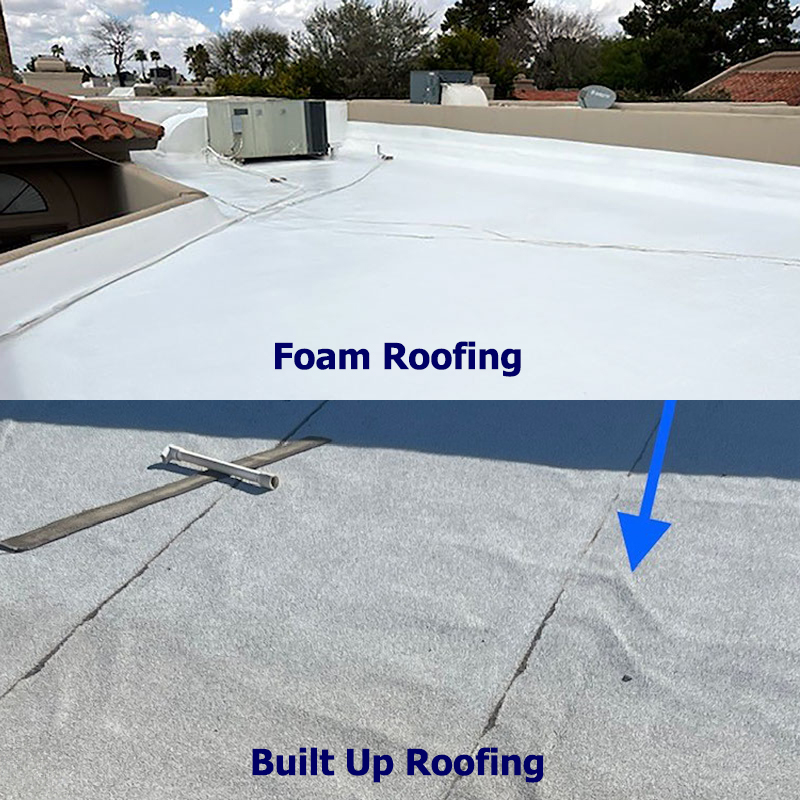
When roofing in Arizona for decades you come to understand what methods of roofing work most efficiently for our unique environment. One topic of advice from at MSW from our Chandler Arizona roofers is what are the benefits of foam roofing compared to built-up roofing for flat roofs in the Valley.
Benefits of Foam Roofing in Arizona (Spray Polyurethane Foam – SPF)
- Superior Insulation:
Foam roofing provides exceptional thermal resistance, keeping buildings cooler and reducing energy costs in Arizona’s hot climate. - Seamless Application:
The spray application creates a continuous, seamless surface, significantly reducing the risk of leaks that are more common in built-up roofing due to seams and joints. - Lightweight:
Foam is much lighter than built-up roofing, making it suitable for structures that may not support the added weight of multiple layers. - Quick Installation:
Foam roofing can often be installed more rapidly than BUR, minimizing disruption to building occupants and operations. - Reflective Coatings:
Foam roofs can be coated with reflective materials to enhance energy efficiency by reflecting UV rays, which is particularly beneficial in sunny climates. - Moisture Resistance:
The closed-cell structure of foam makes it inherently resistant to moisture, reducing the risk of mold and water damage. - Lower Long-term Maintenance:
Foam roofing typically requires less maintenance over time compared to BUR, which may need regular inspections and repairs due to its layered structure. - Flexibility:
Foam can easily adapt to various roof shapes and configurations, making it a versatile option for unique architectural designs.
Cons of Built-Up Roofing (BUR)
- Weight:
BUR is significantly heavier than foam, which may not be suitable for all buildings, especially those with structural limitations. - Longer Installation Time:
The multi-layered application process can take longer, leading to more extended project timelines and potential disruptions. - Seam Vulnerability:
The seams and joints in BUR can be prone to leaks, especially if not installed correctly or if they deteriorate over time. - Less Insulation:
BUR generally provides less insulation compared to foam systems, which can lead to higher energy costs in a hot climate. - Maintenance Needs:
Built-up roofs often require more frequent inspections and maintenance to prevent issues, increasing long-term costs and efforts. - Limited Reflectivity:
BUR typically does not offer the same level of UV reflectivity as foam roofing, which can result in higher heat absorption.
Conclusion
Foam roofing in the Valley offers significant advantages over built-up roofing, particularly in Arizona’s climate, where insulation, moisture resistance, and installation speed are crucial. When it comes to Arizona roofers, MSW Contracting is the ideal choice for roofing projects in Chandler AZ, Scottsdale and the metro Phoenix area due to our local expertise, commitment to quality, and comprehensive customer service. Whether you opt for foam or BUR, MSW Contracting ensures a professional and successful roofing experience.
For a complete overview of MSW’s professional foam roofing services, applications, and local expertise in Chandler Arizona, visit our foam roofing page.
Frequently Asked Questions: Foam Roofing vs. Built-Up Roofing (BUR)
Contact Chandler Arizona Roofers, MSW Contracting LLC; a fully insured, licensed and bonded roofing contractor. Considered one of the best foam roofing companies in the Valley, we have been the go-to Arizona roofing contractor for decades repairing and installing all types of residential and commercial roofs around the valley. Contact us today for a fast, friendly free estimate! Call: 800-934-2573 or email info@roofarizona.com