

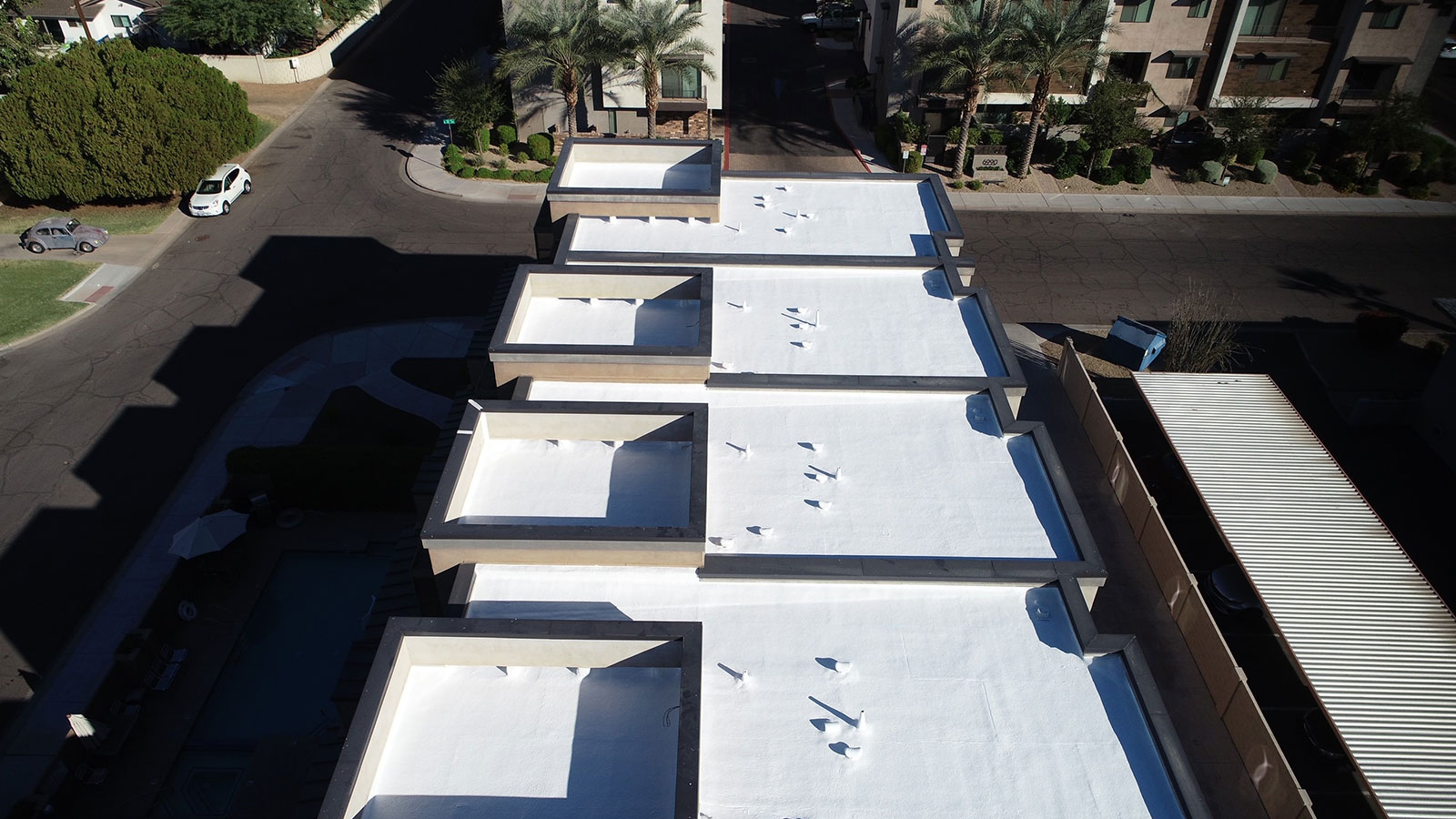
Commercial property owners across Arizona often reach a point where they need to understand whether an existing spray polyurethane foam (SPF) roof is still a reliable long-term asset or whether it is approaching the next stage of repair, recoating, or replacement. That leads to the central question this article answers: how long do commercial foam roofs last in Arizona?
In Arizona’s climate, a properly installed and professionally maintained commercial foam roof can provide reliable service for 20 to 30 years or longer. However, that lifespan is not automatic. It depends heavily on inspection frequency, coating condition, maintenance discipline, and long-term planning.
Foam roofing is not a “set it and forget it” system. It is a restorable system. Understanding how that restoration cycle works is what ultimately determines how long the roof performs.
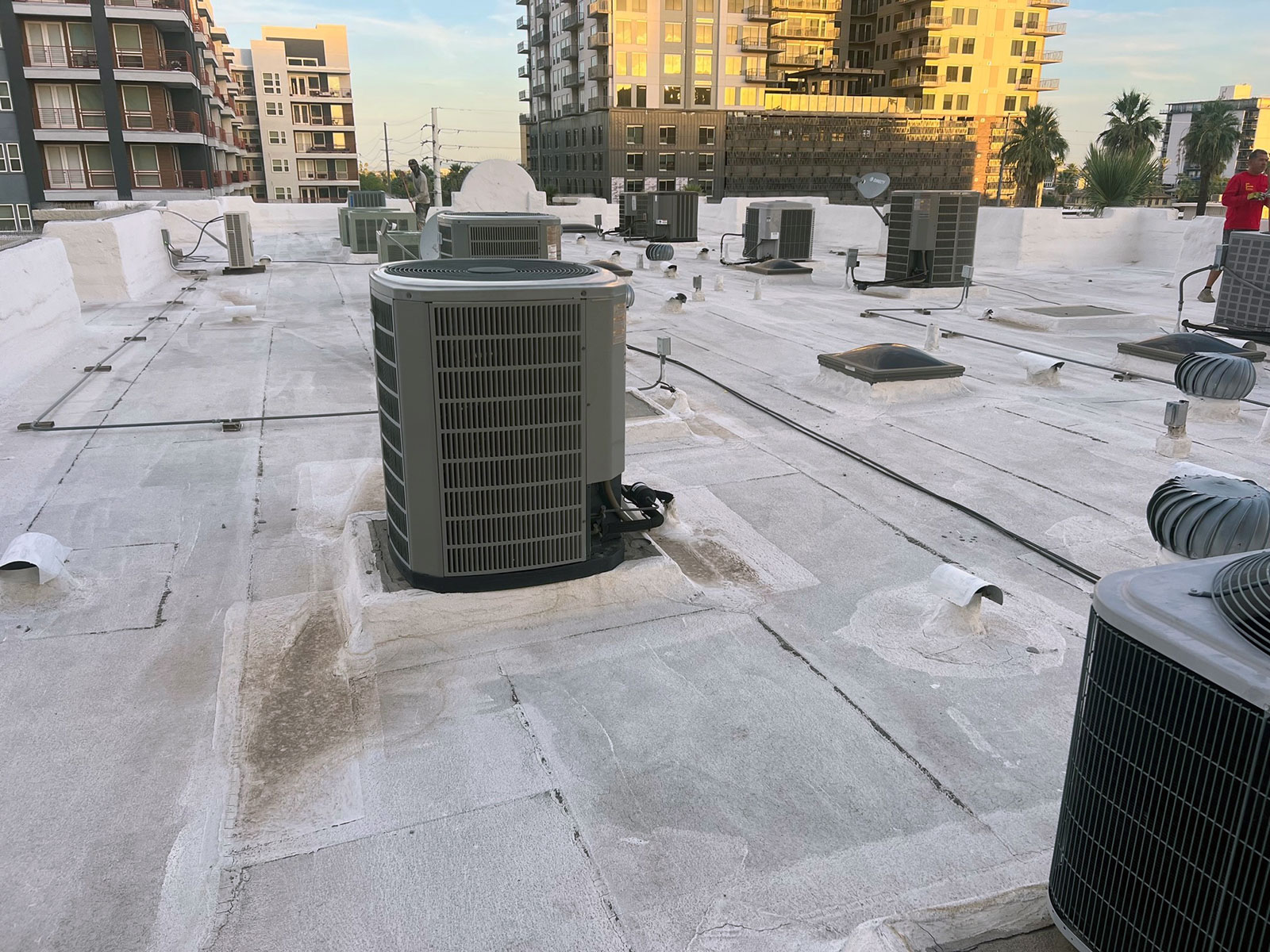
Typical Lifespan of a Commercial Foam Roof
A commercial foam roof is composed of two primary components:
- The spray polyurethane foam layer
- A protective elastomeric coating that shields the foam from ultraviolet exposure and weathering
The foam itself can remain structurally sound for decades if it stays protected. In most cases, the protective coating—not the foam core—is what dictates service life.
When the coating is maintained and renewed at appropriate intervals, the underlying foam can often remain intact far longer than many traditional membrane systems. When coatings are neglected, deterioration accelerates.
This is why lifespan conversations must focus on lifecycle management rather than a single “number.”
Why Arizona Conditions Matter
Arizona presents one of the most demanding environments in the country for commercial roofing systems.
Commercial roofs throughout the state are exposed to:
- Intense ultraviolet radiation year-round
- Extended periods of extreme heat
- Significant daily temperature swings
- Monsoon-driven rainfall
- Wind-driven debris
- Long-term drainage stress
UV exposure is particularly critical for foam roofing. The protective coating is the roof’s primary UV defense. As that coating gradually wears, the foam beneath becomes vulnerable.
Arizona’s climate increases the importance of disciplined inspection and recoating cycles.
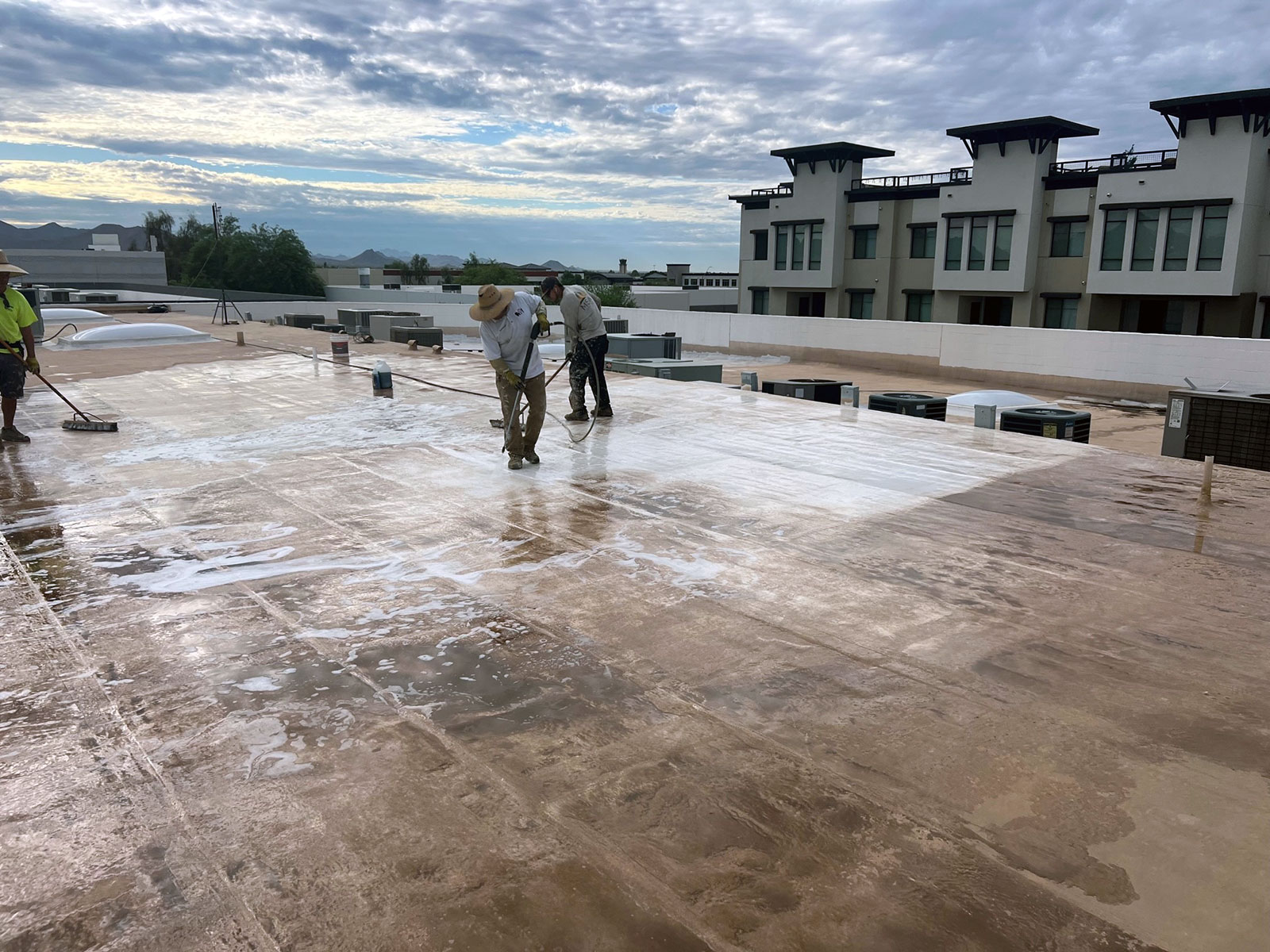
The Role of Recoating in Long-Term Performance
Foam roofing differs from many commercial roofing systems because it can often be renewed rather than fully replaced.
Recoating restores:
- UV protection
- Surface reflectivity
- Waterproofing integrity
- Protective thickness
When performed at the right time, recoating can extend a commercial foam roof’s life significantly without the cost or disruption of full replacement.
However, recoating must occur before the coating layer deteriorates to the point where foam exposure or moisture intrusion becomes widespread.
This timing is what separates a 20-year roof from a 30+ year roof.
How Often Does a Commercial Foam Roof Need Recoating?
There is no universal interval that applies to every building. Recoating schedules depend on:
- Original coating thickness
- Coating type
- Exposure conditions
- Roof traffic levels
- Drainage performance
- Maintenance history
In many commercial applications, recoating may be evaluated within a 5–10 year window depending on coating thickness and exposure conditions, though actual timing should always be determined through professional inspection.
Arizona roofs typically require closer monitoring than roofs in milder climates due to UV intensity.
For commercial owners evaluating long-term budgeting, recoating should be treated as a planned capital event rather than an emergency expense.
Property owners analyzing overall roof lifecycle budgeting may also find it helpful to review broader cost considerations in our Commercial Roofing Cost guide to understand how restoration and replacement planning interact over time.
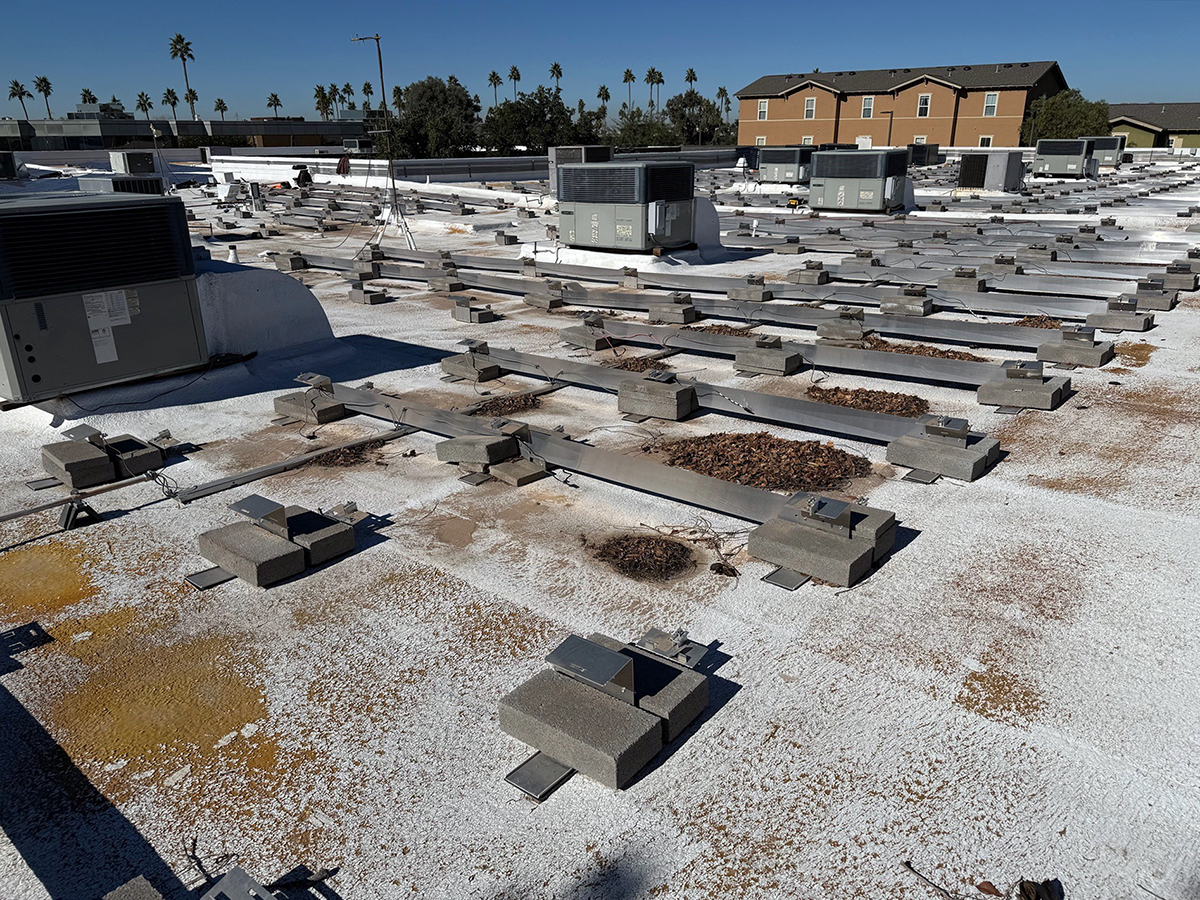
What Shortens Commercial Foam Roof Lifespan
Several patterns consistently reduce service life across commercial properties:
Deferred Maintenance
Minor coating wear or flashing concerns left unaddressed can escalate.
Drainage Deficiencies
Chronic ponding increases stress and accelerates deterioration.
Excessive Foot Traffic
Uncontrolled roof access can damage protective layers.
Penetration Neglect
HVAC curbs, vents, and equipment supports require monitoring.
Missed Recoating Windows
Allowing coatings to thin beyond recommended service levels exposes foam to premature degradation.
Most shortened lifespans are tied not to material failure, but to maintenance failure.
What Extends Foam Roof Life
Commercial foam roofs that reach the upper end of lifespan expectations typically share common characteristics:
- Scheduled professional inspections
- Prompt repair of localized damage
- Documented maintenance history
- Proactive recoating cycles
- Drainage monitoring
- Long-term asset planning
In commercial environments, performance longevity is rarely accidental. It is managed.
Owners who treat roofing as a maintained asset rather than a reactive repair item often see substantially longer service life.
Repair vs. Recoat vs. Replace
Lifecycle management requires understanding when each option makes sense.
When Repair Is Appropriate
Localized damage, small leaks, and limited coating wear can often be corrected without major restoration.
For a broader understanding of foam system characteristics and repair considerations, see our Foam Roofing guide.
When Recoating Is Appropriate
If the foam substrate remains structurally sound but the protective coating is approaching end-of-life thickness, recoating is often the most cost-effective strategy.
This can significantly extend performance without full system replacement.
When Replacement Becomes Necessary
Replacement may be warranted when:
- Widespread moisture infiltration exists
- Structural components are compromised
- Prior restoration cycles were delayed too long
- The roof has reached the end of viable restoration
In many cases, replacement becomes necessary not because of age alone, but because recoating cycles were missed or moisture infiltration was allowed to progress beyond surface-level deterioration.
At that stage, reviewing broader commercial system options becomes important. Additional system considerations are outlined in our Commercial Roofing overview. Property owners evaluating alternative flat-roof systems may also benefit from reviewing our comparison of Foam Roofing vs TPO/PVC Roofing for additional lifecycle and performance considerations.
Commercial Asset Management and Lifecycle Planning
For commercial property owners, the real question is not simply “How long will this roof last?” It is:
How should this roof be managed over the next 10–30 years?
Effective lifecycle planning includes:
- Establishing formal inspection intervals
- Forecasting recoating windows in advance
- Budgeting restoration cycles as planned capital events
- Structuring reserve allocations
- Coordinating roofing work with broader facility upgrades
- Aligning roof planning with capital improvement schedules
- Integrating roofing strategy into facility maintenance planning
Unlike many traditional systems that require full tear-off at end-of-life, a foam roof can often be renewed multiple times if restoration windows are respected. That makes planning discipline the determining factor in overall lifespan.
How Foam Roof Lifespan Impacts Commercial Budgeting
For commercial owners and facility managers, foam roof lifespan directly affects financial predictability.
When recoating cycles are scheduled proactively, property owners can:
- Spread capital expenditures across predictable intervals
- Avoid emergency replacement scenarios
- Reduce disruption to tenants and operations
- Coordinate roofing work with HVAC, solar, or structural upgrades
- Improve long-term return on roofing investment
In multi-tenant retail centers, industrial warehouses, and office portfolios, unexpected roof failure can disrupt tenant continuity and create cascading operational costs. Proactive lifecycle management reduces that volatility.
For owners managing multiple properties across Arizona, aligning inspection schedules and forecasting restoration cycles across buildings allows for more efficient budgeting and phased capital planning.
For property acquisitions, understanding the remaining coating life of a foam roof can significantly affect valuation, due diligence decisions, and immediate capital planning requirements.
Foam roofing, when managed correctly, becomes a renewable asset rather than a depreciating liability.
Portfolio-Level Planning Considerations
For larger commercial owners or property groups, additional factors influence foam roof lifespan strategy:
- Staggering recoating cycles across properties
- Evaluating building-specific exposure conditions
- Coordinating roof upgrades with energy efficiency initiatives
- Aligning roof lifecycle planning with long-term property hold strategy
A building held for 5 years may justify a different restoration decision than one held for 20 years. Understanding projected ownership horizon helps determine whether repair, recoat, or replacement is the most strategic choice.
This broader commercial context strengthens lifecycle decision-making beyond material performance alone.
Conclusion
Commercial foam roofs in Arizona can provide decades of reliable performance when they are properly installed, inspected, maintained, and recoated on schedule.
The lifespan of the foam itself is often less important than the discipline applied to protecting it.
For commercial property owners across Arizona, understanding recoating cycles, maintenance timing, capital planning, and long-term asset strategy is what ultimately determines whether a foam roof delivers 15 years of service—or 30 years and beyond.
Lifecycle authority is not about marketing claims. It is about informed commercial ownership.
Commercial Foam Roof Lifespan FAQs
Schedule a Commercial Roof Evaluation
If your commercial property has a foam roofing system and you want clarity about its remaining lifespan, restoration timing, or long-term capital planning strategy, a professional evaluation can provide the data needed to make informed decisions.
To evaluate the remaining service life of your commercial foam roof and develop a structured maintenance or restoration plan, contact MSW Contracting to schedule a commercial roof evaluation.
Call Robert Wilson: 602-284-8542
Email: Robert@roofarizona.com