

When a commercial roof begins leaking, reaches the end of its service life, or requires major repairs, building owners are often faced with three common replacement options: spray polyurethane foam (SPF), TPO roofing, and PVC roofing. Each system offers advantages depending on the building, budget, maintenance expectations, and long-term plans for the property.
Arizona’s intense UV exposure, summer heat, monsoon weather, and heavy rooftop HVAC usage can all influence how a commercial roofing system performs over time. Rather than focusing on which roofing system is universally “best,” the more important question is which system is the best fit for your building. Arizona’s extreme UV exposure and prolonged summer heat can accelerate roof surface degradation, making maintenance planning and lifecycle strategy particularly important for commercial property owners in this region.
Whether you are planning a roof replacement, evaluating repair options, or researching commercial roofing systems, understanding the differences between SPF, TPO, and PVC roofing can help you make a more informed decision. Property owners comparing systems often begin by evaluating their overall commercial roofing options and how each system aligns with the needs of the building.
Why Many Arizona Building Owners Choose Foam Roofing
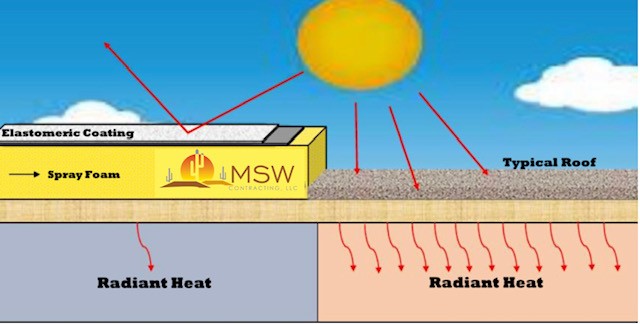
Spray polyurethane foam roofing has become a popular commercial roofing option throughout Arizona because it combines seamless waterproofing, insulation value, repairability, and long-term service potential in a single roofing system.
Unlike membrane roofing systems that rely on seams throughout the roof assembly, SPF roofing is applied as a continuous layer directly to the roof surface. This simplifies waterproofing around rooftop equipment, drains, curbs, skylights, and other penetrations commonly found on commercial buildings.
When properly maintained, SPF roofing systems can often be repaired and recoated without requiring a complete roof replacement. According to the Spray Polyurethane Foam Alliance (SPFA), regularly maintained SPF roofing systems can provide decades of service and may remain in place for the life of the building when supported by appropriate maintenance and recoating programs.
Because the foam becomes part of the roofing assembly, SPF roofing is also frequently evaluated by property owners interested in energy performance and long-term operating efficiency. Additional guidance regarding maintenance, repairs, and renewal of SPF roofing systems is available through the SPFA Technical Documents Library.
Complex commercial roofs containing multiple HVAC units, vents, drains, and rooftop penetrations are often candidates for SPF roofing because the system conforms to irregular roof layouts. Many Arizona property owners evaluating SPF roofing compare these benefits against the repair, restoration, and replacement options discussed on MSW Contracting’s Foam Roofing page.
Understanding TPO Roofing
TPO (Thermoplastic Polyolefin) roofing is one of the most commonly installed commercial roofing systems in North America.
TPO roofing utilizes manufactured membrane sheets that are joined together using heat-welded seams. The reflective surface of many TPO roofing systems can help reduce rooftop heat absorption, making them a consideration for building owners evaluating energy performance.
TPO is commonly installed on office buildings, warehouses, retail centers, educational facilities, and industrial properties throughout the United States.
Long-term performance depends on proper installation, maintenance, drainage conditions, rooftop traffic, and ongoing inspections. When evaluating TPO roofing, maintenance requirements, future repair accessibility, rooftop equipment density, and long-term ownership plans matter.
Property owners researching membrane roofing systems can also review our article on high-quality TPO roofing solutions in Chandler, Arizona, which discusses MSW Contracting’s GAF Commercial training and ongoing commitment to staying current with evolving TPO roofing technologies and installation practices.
Understanding PVC Roofing
PVC (Polyvinyl Chloride) roofing is another single-ply membrane roofing system frequently discussed alongside TPO roofing.
While both systems utilize heat-welded seams, PVC roofing is often selected for commercial applications where operational requirements differ from those of a typical office or warehouse environment.
Restaurants, food-processing facilities, manufacturing buildings, and certain industrial properties are examples of environments where PVC roofing may be evaluated because of its performance characteristics. Like TPO, PVC roofing can provide long-term protection when properly installed and maintained.
When evaluating PVC roofing, building operations, environmental exposure, maintenance expectations, and long-term ownership plans should guide the decision.
SPF vs TPO vs PVC: Key Differences
When comparing SPF, TPO, and PVC roofing systems, most commercial property owners focus on four practical considerations.
Waterproofing
SPF roofing is applied as a seamless system that does not rely on field seams across the roof surface.
TPO and PVC roofing systems utilize membrane sheets connected through heat-welded seams that create a waterproof assembly when properly installed and maintained.
Repairability and Lifecycle Strategy
SPF roofing is often evaluated for its ability to accommodate localized repairs and future recoating programs. Industry guidance from both the SPFA and the National Roofing Contractors Association (NRCA) recognizes maintenance and repair procedures designed to extend the useful life of SPF roofing systems.
For property owners comparing foam, TPO, and PVC systems from a long-term ownership perspective, expected service life should be part of the decision. Our guide on commercial foam roof lifespan in Arizona explains how recoating cycles, inspections, maintenance planning, and capital budgeting affect the long-term performance of SPF roofing systems.
TPO and PVC roofing systems can also be repaired, but long-term strategy may differ depending on membrane age and condition. In some situations, aging membrane systems may require partial or full replacement rather than restoration.
Energy Performance
SPF roofing contributes insulation value as part of the roofing assembly.
TPO and PVC roofing systems are commonly selected for their reflective surfaces, which can help reduce rooftop heat absorption. Overall energy performance depends on insulation design, building usage, HVAC demands, and other project-specific factors.
Complex Roof Layouts
Buildings containing numerous rooftop penetrations, HVAC systems, drains, skylights, and equipment often require careful waterproofing details.
Because SPF roofing conforms directly to the roof surface, many property owners evaluate it for buildings with complex roof configurations. TPO and PVC systems can also accommodate complex roof layouts but often require additional flashing and membrane transition details.
Additional technical guidance regarding spray foam roofing performance and coating systems is available through the IBHS Spray Foam Roofing Guide.
Arizona Case Study: Replacing a TPO Roof with Foam Roofing
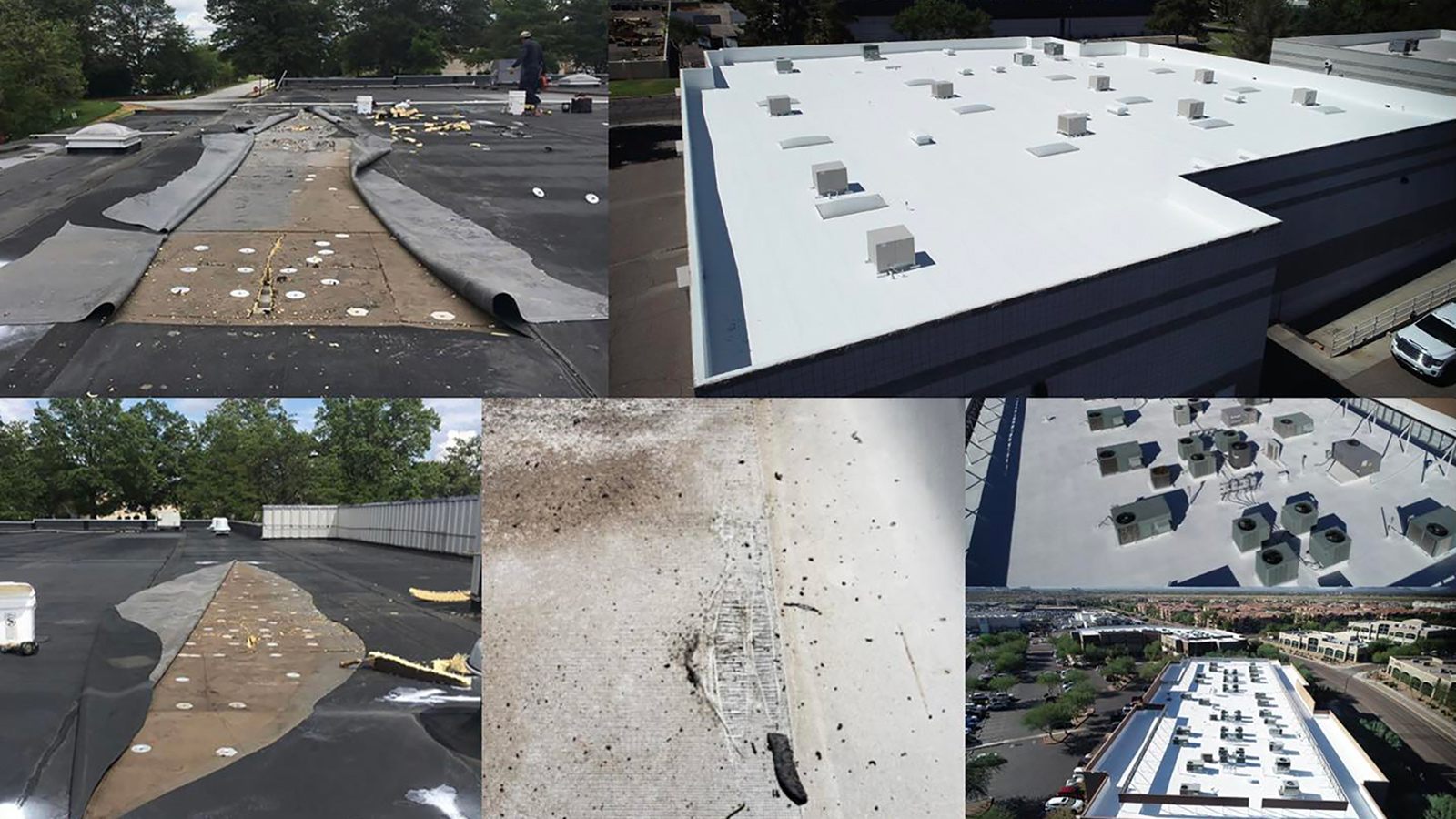
This commercial foam roofing installation project in Gilbert, Arizona completed by MSW Contracting provides a real-world example of how building owners evaluate roofing systems based on the condition of the roof, maintenance expectations, and long-term plans for the property.
The building contained an aging TPO roofing system that had developed leak-related issues. After evaluating available options, the decision was made to remove the existing membrane roof and install a spray polyurethane foam roofing system designed to provide seamless waterproofing protection.
This example demonstrates how roofing decisions are based on roof condition, maintenance expectations, budget considerations, and long-term asset strategy rather than product popularity alone.
When Building Owners Often Choose Each Roofing System
While every commercial property is different, certain roofing systems are often evaluated more heavily for specific building types and ownership goals.
Foam Roofing (SPF) is frequently considered for buildings with complex roof layouts, multiple rooftop penetrations, long-term ownership objectives, and property owners interested in future restoration and recoating options.
TPO Roofing is commonly evaluated for warehouses, office buildings, retail centers, and other commercial properties seeking a widely used membrane roofing system with reflective performance characteristics.
PVC Roofing is often considered for restaurants, food-processing facilities, and certain industrial environments where operational conditions may influence roofing system selection.
Ultimately, the best roofing system depends on the building itself, the condition of the existing roof, maintenance expectations, budget considerations, and long-term ownership goals.
Which Roofing System Is Right for Your Building?
There is no single roofing system that is ideal for every commercial property.
The best choice often depends on:
- Current roof condition
- Building design
- Maintenance expectations
- Energy-performance goals
- Rooftop equipment density
- Budget considerations
- Long-term ownership plans
Before committing to a repair, restoration, or replacement strategy, many Arizona property owners begin with a comprehensive commercial roof inspection to better understand the condition of the roof and the options available.
In practical terms, SPF roofing is often evaluated for its seamless waterproofing and long-term restoration pathway, TPO is widely selected as a common membrane solution for many commercial building types, and PVC is frequently considered for properties with specific operational conditions. The right choice depends less on product popularity and more on roof condition, ownership horizon, maintenance strategy, and long-term asset planning.
Frequently Asked Questions About Foam, TPO, and PVC Roofing
Speak With an Arizona Commercial Roofing Contractor
Choosing between SPF, TPO, and PVC roofing is ultimately a building-specific decision. The most successful roofing projects begin with a clear understanding of the roof’s condition, the operational needs of the property, and the owner’s long-term objectives.
MSW Contracting works with commercial property owners, facility managers, property management firms, business owners, and commercial real estate investors throughout Arizona.
Property owners evaluating repair, restoration, or replacement options can schedule a consultation with MSW Contracting to discuss the condition of their roof and the most practical options for their building.
Call Robert Wilson: 602-284-8542
Email: Robert@roofarizona.com
Fill Out Our Contact Form: Contact MSW Contracting