

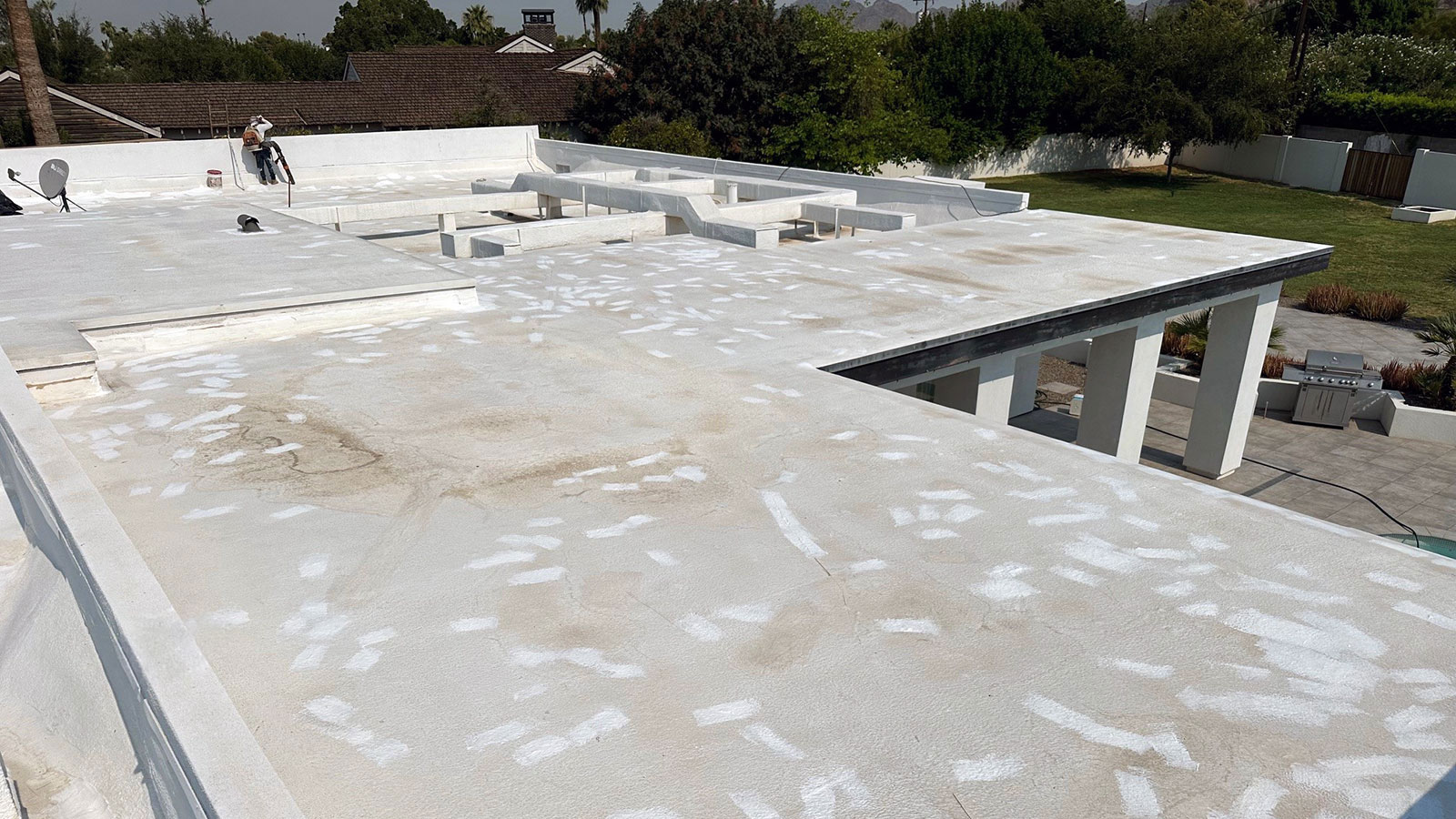
A foam roof that starts leaking again after a repair can be especially frustrating for homeowners in Phoenix, Arizona, and surrounding communities, including Chandler and Scottsdale. The original leak appeared to be fixed, the ceiling dried out, and everything seemed normal. Then another rainstorm moves through the Valley, and water begins dripping in the same place.
At MSW Contracting LLC, we understand why homeowners want to know whether the original repair failed or something else is happening beneath the roofing surface.
A recurring foam roof leak does not necessarily mean the previous repair was unsuccessful. Water may be entering through another vulnerable area, the original problem may not have been completely resolved, or deterioration may extend beyond the location that was previously repaired.
Understanding the difference is important before another repair is attempted.
Why Would a Foam Roof Start Leaking Again After Repairs?
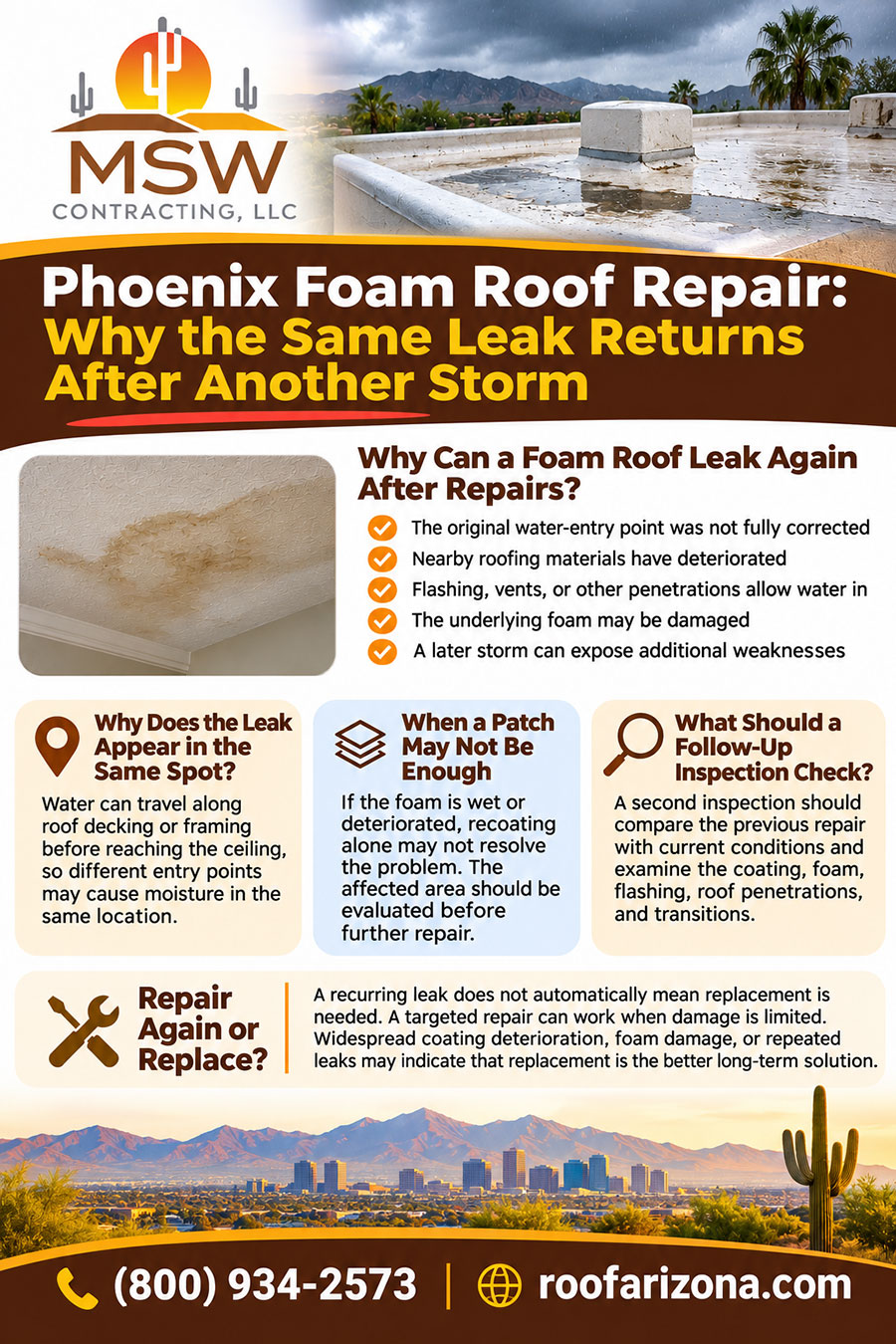
A foam roof may start leaking again because the original water-entry point was not fully corrected, nearby roofing materials have deteriorated, or another vulnerable area becomes exposed during subsequent rainfall.
Common explanations include:
- An incomplete repair: The original work addressed one opening but did not eliminate the entire source of water intrusion.
- Adjacent deterioration: Cracks, coating damage, or compromised materials near the repaired area allow water to enter.
- Flashing or penetration problems: Roof vents, skylights, equipment supports, and transitions can develop separate leak paths.
- Underlying foam damage: Deteriorated foam beneath a damaged coating may require more than another surface application.
- Different storm conditions: Wind direction, rainfall intensity, and storm duration can expose weaknesses that remained unnoticed during earlier rainfall.
Applying another patch without identifying the source may provide only temporary relief.
Why Does the Leak Keep Appearing in the Same Ceiling Spot?
When water returns to the same interior location, homeowners naturally assume the previous repair failed.
However, the ceiling stain does not always identify the actual roof opening.
Water can travel along roof decking, framing, or other materials before reaching the ceiling. Different entry points may produce moisture in the same location.
This is why recurring leaks deserve further investigation rather than simply sealing the area directly above the stain.
When Another Foam Roof Patch May Not Be Enough
Spray polyurethane foam roofing relies on a protective coating to shield the foam from ultraviolet exposure and weather-related deterioration. Maintaining that coating is an important part of preserving the performance of foam roofing systems in Arizona’s demanding climate.
When the coating becomes compromised, the underlying foam may be exposed to moisture and additional damage.
A localized repair can be effective when the problem is limited and surrounding materials remain serviceable. However, repeated patching may not resolve leakage involving damaged foam, deteriorated flashing, or broader coating problems.
If moisture has penetrated the foam or the underlying material has deteriorated, applying another coating alone may not resolve the problem. The affected area must be evaluated to determine whether damaged material needs to be repaired or replaced before recoating.
MSW Contracting has addressed these types of roofing conditions through projects such as repairing and recoating a leaking foam roof in Scottsdale, Arizona, where damaged areas were repaired before the protective coating was renewed.
Similar considerations apply to commercial foam roofs, where larger roof areas and equipment penetrations can introduce additional challenges. MSW provides commercial roofing services throughout the Phoenix metropolitan area.
What Should You Do When Your Roof Starts Leaking Again?
If a previously repaired roof begins leaking during another storm, documenting the conditions can help your roofing contractor investigate the problem.
- Photograph the leak. Record dripping water, expanding ceiling stains, or changes to previously damaged areas.
- Note when water appeared. Did the leak begin immediately, during heavy rainfall, or after several hours?
- Find previous repair documentation. Invoices, photographs, and descriptions of completed work can identify what was repaired.
- Check for additional interior moisture. Water may affect nearby areas even when the original stain remains most noticeable.
- Avoid attempting another roof patch during rainfall. Wet roofing surfaces are dangerous, and improper repairs may complicate the investigation.
If water approaches electrical fixtures or ceiling materials appear unstable, prioritize safety and obtain professional assistance.
What Should a Follow-Up Roof Inspection Investigate?
A second roof inspection should consider what was previously repaired and why water may have returned.
For foam roofing systems, this involves examining the earlier repair, surrounding coating, deteriorated foam, flashing, roof penetrations, and transitions between roofing materials.
Comparing the original repair location with newly observed moisture conditions can help determine whether the same problem persists or another entry point has developed.
MSW Contracting’s roof leak repair services focus on identifying potential sources of water intrusion before recommending corrective work.
For homeowners experiencing repeated leaks during a rainy week, identifying the underlying problem is more valuable than repeatedly treating the same interior symptom.
Should You Repair Your Foam Roof Again or Replace It?
A recurring foam roof leak does not automatically mean the roof needs replacement.
When damage is isolated and surrounding foam and protective coating remain serviceable, another targeted repair may be appropriate.
However, recurring leaks involving widespread coating deterioration, damaged foam, multiple vulnerable areas, or extensive aging may indicate that localized repairs are no longer practical.
The decision should consider the roof’s age, overall condition, previous repair history, and extent of deterioration.
When repairs are unlikely to provide a dependable long-term solution, MSW Contracting can evaluate whether roof replacement is a more appropriate investment.
The goal is to recommend a solution based on the condition of the existing roofing system, not simply because another storm produced another leak.
Recent Foam Roof Projects:


Phoenix Foam Roof Repair After Another Rainstorm
If your foam roof was repaired but started leaking again during recent rainfall, MSW Contracting LLC can help investigate the problem and determine what corrective work may be appropriate.
Whether the issue involves damaged foam, deteriorated coating, flashing, or another vulnerable area, identifying the source of recurring water intrusion is the first step toward a more reliable repair.
MSW Contracting provides foam roof repair and roof leak repair services in Phoenix, serving homeowners in Chandler, Scottsdale, and communities throughout the Valley.
Call (800) 934-2573, email info@roofarizona.com, or contact MSW Contracting to request a roof inspection or estimate.